Make a little Halloween magic
How to Make a Boo Box for Kids: 3 Easy Ideas
A box, a small surprise, and something to do together. Build a Halloween gift around the child you know: a story lover, a maker, or a creature builder. Here are three easy starting points, with six gift options you can shop along the way.
Explore the box ideasResearched buying advice; no hands-on testing is claimed. Retailer ratings are dated snapshots. See how we pick · Affiliate disclosure
As an Amazon Associate, Best Toy Guide may earn from qualifying purchases. How affiliate links work.
Product facts checked against published sources. Prices and availability are confirmed at Amazon.
What is a boo box?
A boo box is a small collection of Halloween gifts presented in a box; a boo basket is the same idea in a basket. Families can give one to a child, friend, or neighbor as a seasonal surprise. It is an optional tradition, with no required size, shopping list, or price. Our version starts with one gift the recipient will actually use. A reused box with their name and a hand-drawn pumpkin is plenty of presentation.
Sources: Cardfactory
The simplest formula: one gift + one invitation
Choose the activity before buying the container. A book might invite a shared read-aloud; a craft could come with a promise to make something together. The gift can also be the activity, so there is no need for a second purchase. The three recipes below offer two options each: choose one, or pair them only if both fit your budget. Use supplies already at home for the finishing touches.
- Pick a theme the child enjoys: friendly stories, making monsters, or building creatures. Ask a caregiver about their age and current interests if you are unsure.
- Set a total spending limit before shopping. Include delivery, wrapping, and any supplies the activity needs; spend on the usable gift first.
- Find a clean, sturdy box that fits the actual package. Reuse a delivery box, gift bag, or basket; decorate the outside with a paper pumpkin or the child's name.
- Add a personal invitation: ‘A little boo for you! Shall we make something together?’ Sign it so the family knows who the gift came from.
1. The story-and-color box
For ages 3–5, make the surprise an invitation to slow down together. Start with Room on the Broom if the child enjoys witch stories, or choose a farm-themed water activity for a child who prefers familiar animals. Both can work in one box, but either is a complete starting point on its own. The Halloween feeling can come from your drawing on the lid; every item inside does not need a spooky character.
- Pack one book or activity flat, keeping its cover and pen protected. Check the box opening before wrapping; a paperback can be wider than a little gift basket.
- Make a paper invitation using supplies you have: ‘Pick a character voice for our story’ or ‘Let's invent a name for every animal.’
- If you choose both, put the book at the back and the activity in front. Leave the water pen empty until playtime, following the maker's instructions.

Start with a story
Room on the Broom (Paperback)
Julia Donaldson and Axel Scheffler's 32-page paperback gives this box a witch-and-animal story to share. The publisher recommends ages 3–7.
Check first: Choose the paperback edition shown. Preview the story if witches or dragons worry the child.
Check price at Amazon ↗Product details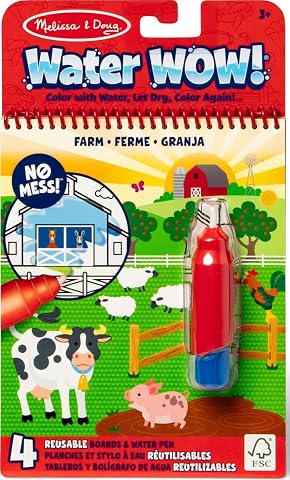
Or choose gentle coloring
Melissa & Doug Water Wow! On the Farm
Four reusable farm boards and a refillable water pen offer a quiet activity. The maker recommends ages 3–6; this is the regular farm design, not a Halloween version.
Check first: Add water at playtime and let the boards dry for reuse. There are no Halloween scenes in this pad.
Check price at Amazon ↗Product details2. The make-a-monster box
For ages 6 and up, turn a craft gift into a tiny monster workshop. Choose rock painting for a project to display later, or dough for creatures that can be remade. Add a drawing of your own funny monster as the invitation. These are our Halloween play ideas for everyday materials: the kits do not need to include special monster templates. Give the family a heads-up about the workspace the activity will need.
- Choose paint or dough according to the child's interests and the caregiver's preferences. Protect the work surface for painting and plan time for drying.
- Write three optional creature prompts on paper: ‘A monster who loves books,’ ‘A very shy dragon,’ and ‘A creature with a surprising job.’
- Keep the kit together with its instructions. If dividing a dough multipack for known recipients, keep the age and ingredient information with each gift and check with caregivers first.
Paint a little creature
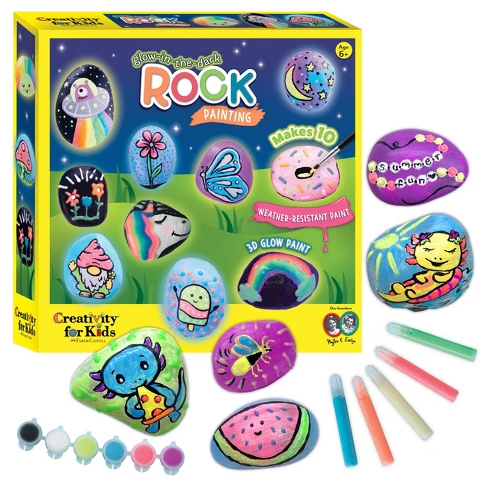
Creativity for Kids Glow-in-the-Dark Rock Painting
The ages-6+ kit includes ten rocks, paints with glow colors, and two brushes. Our twist: paint a family of friendly faces and invent a name for each.
Check first: Allow drying time and protect the table. Monster faces are a suggested project, not preprinted designs.
Check price at Amazon ↗Product details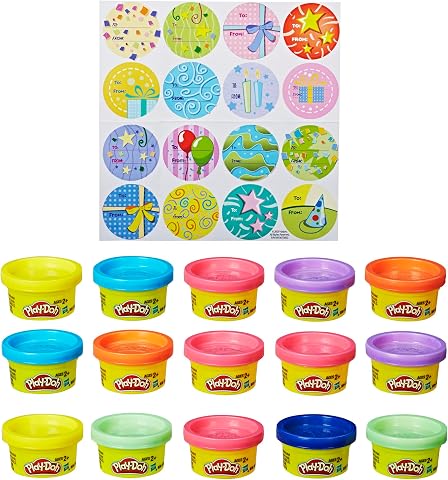
Or make and remake
Play-Doh Party Bag 15-Pack
Fifteen one-ounce cans offer small portions for modeling. A few mini creatures can be enough for this box; consider a multipack when you already have several recipients in mind.
Check first: Labeled ages 2+, but used here for a 6+ activity. Contains wheat; do not assume a non-food gift is allergy-safe.
Check price at Amazon ↗Product detailsSources: Faber-Castell / Creativity for Kids, Amazon, Food Allergy Research & Education (FARE)
3. The creature-builder box
For ages 7 and up, let a small construction set be the main event. Choose the spider for a child who likes bugs, or the dragon for a fantasy fan. A paper landscape and an invented mission turn either into a personal gift without buying more pieces. These are alternatives: you do not need two LEGO sets to make a complete box. Keep the unopened set and its instructions together.
- Choose one creature. The spider set is labeled 7+ and the dragon 6+; use the exact set's guidance rather than the size of its box.
- Fold a sheet of paper into a backdrop or draw a map on the gift-box lid. Let the child decide whether it becomes a forest, castle, or creature café.
- Add one story starter: ‘Your creature has found a mysterious door. Where does it lead?’ Save the paper for a new scene after the next rebuild.

For a spider fan
LEGO Creator Surprising Spider 31159
LEGO 31159 has 153 pieces and a 7+ label. Its spider, scorpion, and snake options give a creature fan a reason to rebuild.
Check first: Build one model at a time. Check that the child actually likes spiders, and keep small pieces away from younger siblings.
Check price at Amazon ↗Product details
Or choose a dragon
LEGO Creator Red Dragon 31145
LEGO 31145 has 149 pieces and a 6+ label. Dragon, phoenix, or fish builds offer a fantasy alternative to the spider.
Check first: Only one model can be built at a time. The paper scenery suggested here is homemade, not included in the set.
Check price at Amazon ↗Product detailsKeep it affordable and easy to open
If your total limit is $15, keep the gift below that after delivery and reuse the container. At $25, a second item is still optional; it is fine to spend less. These are suggested spending limits, not current prices for the pictured recipes. Check Amazon's selected edition, seller, delivery date, and final total before ordering. A borrowed library book and a homemade activity can also become a Halloween evening without buying a gift at all.
- Fit the largest package first, then place the note on top. Skip decorative filler that makes the box harder to unpack or adds little to the activity.
- Keep labels, instructions, and any gift receipt. If something does not fit, wrap it beside the box instead of discarding important packaging.
- Give the box when there is time to enjoy it. A quiet October weekend can suit a craft better than the rush before trick-or-treating.
Check age labels and materials before gifting
Follow the exact product's age guidance and keep small parts away from children under three. None of these recipes is a blanket recommendation for babies or toddlers. FARE encourages non-food Halloween choices, but warns that some non-food items can still contain allergens. The linked Play-Doh contains wheat. Ask the caregiver about materials and any optional food; a candy-free box is not automatically allergy-safe. Keep food and non-food treats separate if you are also giving out treats at the door.
Sources: U.S. Consumer Product Safety Commission, Food Allergy Research & Education (FARE), Amazon
Before you choose
Is a boo box different from a boo basket?
The container is the difference for these ideas. Use whichever you have and make sure it fits the gift. You do not need to buy a themed basket to take part.
When should you give a boo box?
There is no date requirement. Choose a moment in October when the recipient can enjoy the activity, or give it as your family's Halloween surprise. Agree on timing with a caregiver if it is for someone else's child.
What if I only want to buy one thing?
One book, craft, or building set plus a handwritten invitation is a complete idea. The paired products above are choices, not compulsory bundles. A drawing on a reused box can supply the seasonal theme.
Can I make one for a baby or toddler?
Yes, but start a separate shortlist using that child's exact age and the maker's guidance. Do not copy these recipes for a younger child. Choose an age-appropriate book or toy with the caregiver, and decorate the outside of the container instead of adding loose novelty pieces.
Checked sources