A reason to play another round
Board Games for Kids: Find the Right Game for Your Table
Buy for the table that will actually play. A family with a younger sibling, a child who wants to play alone, and a group that loves competition need different gifts. Use our shortlist to compare the play and the setup before you commit to a game-night box.
Researched buying advice; no hands-on testing is claimed. Retailer ratings are dated snapshots. See how we pick · Affiliate disclosure
Compare 8 picks at a glance
Estimated budget bands, not live prices. Scroll the table sideways on small screens.
| Gift / age | Budget band | A reason to choose it | Check first |
|---|---|---|---|
| Jenga ClassicAges 6–12 | Under $25 | The family enjoys short turns and a shared moment of suspense. | A falling tower would disturb nearby sleepers or rebuilding feels like a chore. |
| Hasbro Boggle ClassicAges 8–12 | Under $25 | Word-loving older children | Paper and pencils are extra |
| Scrabble Classic Board GameAges 10–12 | Under $25 | Word-loving older children | Language editions differ |
| Blokus Strategy Board GameAges 7–12 | Under $25 | Spatial puzzle fans | Needs a clear shared tabletop |
| Orchard Toys Shopping List GameAges 3–7 | Under $25 | Preschool picture matching | Keep the loose cards together |
| Educational Insights Sneaky, Snacky SquirrelAges 3–6 | Under $25 | A small group learning to take turns with adult support. | Wind and stealing spaces can undo progress; introduce those setbacks before competitive play. |
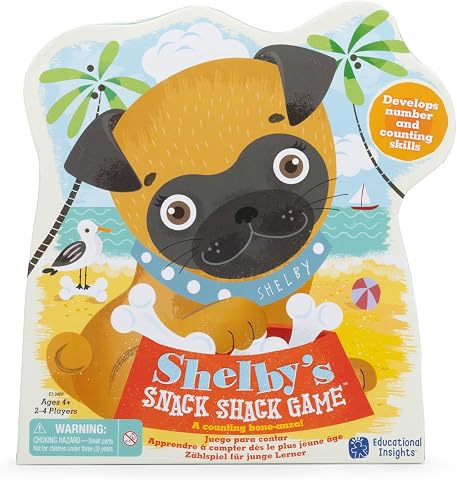
| Educational Insights Shelby's Snack ShackAges 4–7 | Under $25 | A small group learning to take turns with adult support. | Children need to count their catches; an adult can support this without taking over the tool. |
| Educational Insights Reel Big CatchAges 3–6 | Under $25 | A small group learning to take turns with adult support. | There is one rod to share; protect the paper measuring tape from water. |
Start with the youngest regular player
The recipient’s age is only part of the decision when siblings will join. Follow the manufacturer’s guidance and check small-piece warnings. Then think about the reading, counting, and waiting the game asks of each player.
Sources: U.S. Consumer Product Safety Commission (opens in a new tab)
Match the mood of the group
A stacking game turns physical suspense into the main event. A matching game gives a younger child a clearer visual task. Strategy games ask for more planning and can be rewarding when everyone wants that pace. Choose the kind of challenge the household enjoys, not a game you wish they would enjoy.
Ask who will explain the first round
Our adult-involvement field helps separate a gift a child can explore alone from one that needs a willing teacher or opponent. Read the product-specific contents and rules before assuming a box supports your whole group. Keep the first round about learning the game rather than keeping a perfect score.
Make replay practical
Count the pieces when packing up and choose a storage spot before the gift is forgotten in a pile. A game earns repeat sessions when its setup fits the time available. Use Save to keep candidates, then Compare to see their age and setup trade-offs side by side.
The short list
Use Save to keep a candidate and Compare to put up to three side by side. Open the full brief for contents, play ideas, sources, and trade-offs.

Gift ages 6–12
Jenga Classic
The familiar wooden stacking game remains a dependable, no-reading-required family gift.

Gift ages 8–12
Hasbro Boggle Classic
A compact word hunt for confident readers who enjoy spotting patterns against the clock.

Gift ages 10–12
Scrabble Classic Board Game
The familiar crossword tile game for word-loving older kids and family tables.

Gift ages 7–12
Blokus Strategy Board Game
A spatial strategy game with one easy rule and enough tactical depth for repeated family play.

Gift ages 3–7
Orchard Toys Shopping List Game
A simple picture-matching memory game with a familiar shopping theme for younger players.

Gift ages 3–6
Educational Insights Sneaky, Snacky Squirrel
Squirrel squeezer, 20 acorns, four logs, spinner and box-shaped board.
Gift ages 4–7
Educational Insights Shelby's Snack Shack
Pug squeezer, 40 bones, four bowls, double spinner and board.

Gift ages 3–6
Educational Insights Reel Big Catch
Fishing rod, nine telescoping fish, measuring tape and game guide.
Ready to check retailer prices?
- Jenga ClassicCheck price at Amazon for Jenga Classic (opens in a new tab) ↗
- Hasbro Boggle ClassicCheck price at Amazon for Hasbro Boggle Classic (opens in a new tab) ↗
- Scrabble Classic Board GameCheck price at Amazon for Scrabble Classic Board Game (opens in a new tab) ↗
- Blokus Strategy Board GameCheck price at Amazon for Blokus Strategy Board Game (opens in a new tab) ↗
- Orchard Toys Shopping List GameCheck price at Amazon for Orchard Toys Shopping List Game (opens in a new tab) ↗
- Educational Insights Sneaky, Snacky SquirrelCheck price at Amazon for Educational Insights Sneaky, Snacky Squirrel (opens in a new tab) ↗
- Educational Insights Shelby's Snack ShackCheck price at Amazon for Educational Insights Shelby's Snack Shack (opens in a new tab) ↗
- Educational Insights Reel Big CatchCheck price at Amazon for Educational Insights Reel Big Catch (opens in a new tab) ↗
Amazon links can earn a commission. Other retailer links are direct; prices and stock are confirmed by the retailer.
Before you choose
Can I assume every puzzle is a family game?
No. Some logic puzzles are designed around one player, while board games may need partners. Check the product brief and manufacturer’s player information rather than relying on the category name.
What should I compare for siblings of different ages?
Look at reading, dexterity, memory and how much help each player needs on a turn. Check the youngest child's manufacturer age fit. A cooperative goal can change competition, but it does not remove those other demands or guarantee that every participant will enjoy the game.
Checked sources